
Telling Time
Finding your way between yawning gaps and gaping yawns

I was, I’m afraid, mildly grumpy at my desk yesterday when I realised I had spent half a paragraph moving four characters into a room and seating them in four specific chairs. The narrative required that I get them into the room, and the arrangement of the chairs was significant, but still — half a paragraph? Really? Oh to be a playwright or a screenwriter I briefly thought — ‘X, Y, Z, and Ω enter and sit down’. Of course, I could choose to write a novel like that, but, for good or ill, that’s not the novel I’m writing. Hence the moment’s grumpiness, before I went on and wrote the rest of the scene. I did, though, highlight this passage as something I’d need to go back to and re-assess — if I had made myself grumpy (even just a little), what would I be doing to the reader?
Without wishing — or daring — to make sweeping statements about the nature of fiction, I think it is generally fair and more or less usually true to say that fiction is concerned with human experience. And human experience is necessarily, inevitably, embedded in time. It is simply how we are made. That this is a particularity of the way in which we humans experience the world, and the fact that, as Carlo Rovelli puts it in his amazing The Order of Time, “at the fundamental level we currently know of, there is little that resembles time as we experience it. There is no special variable ‘time’, there is no difference between past and future,” is fascinating, but really of no help at all to a writer struggling to convey time on the page.
As with all else in the writer’s craft, it depends on the relationship between the world of the story and the world of the reader, which is, as in so much else, a question of the Goldilocks principle: too far, too close, or just right.
If you simply say, “Years passed. A lot happened,” time is accounted for but not experienced. The story is not being inhabited, it is being reported. You have, as a writer, positioned character and reader too far away from each other, separated by a yawning gap of nothing at all.
If, on the other hand, you narrate every single thing that happened during those years, you risk, first of all, writing a book that would take a lifetime to read, and, secondly, boring the socks off your reader — instead of a yawning gap, you have a gaping yawn.
So where does that put Goldilocks, who is, of course, for our purposes, the reader? The answer is, again, inevitably and irritatingly — it depends. And it depends on such a myriad host of things that there can never be a single golden rule, because fundamentally the only rule to adhere to is — what is right for your story at this particular moment in the telling of it?
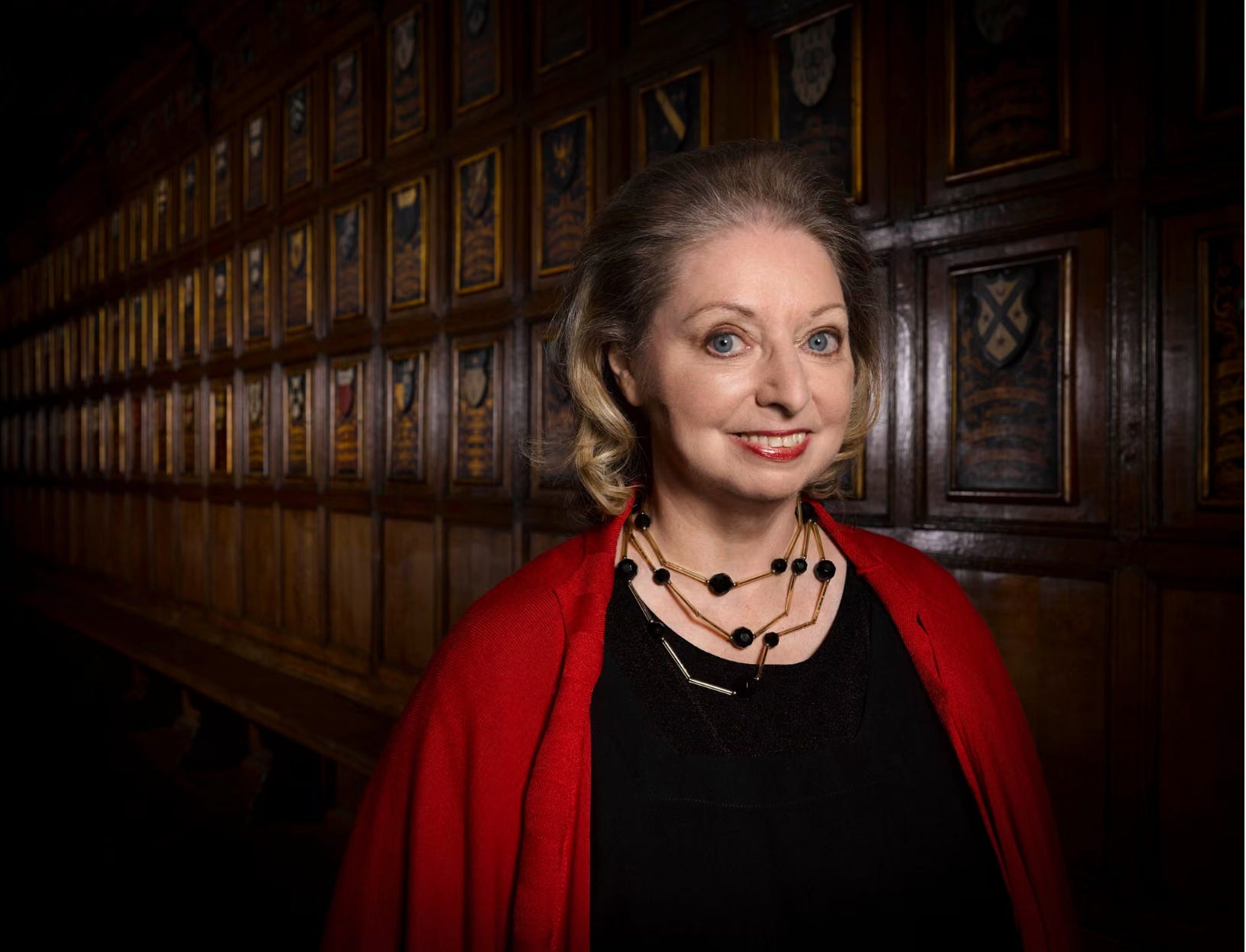
No-one, I think, has put this more clearly and effectively than Hilary Mantel, both in the actual writing of the Wolf Hall trilogy, and in her explanation of the choices that she made:
“Wolf Hall spans 20 years or so. Bring Up the Bodies is more tightly constructed and spans only 9 months: and of that 9 months, I concentrate on three weeks, and the story pulls the attention inward, to the day, the hour, and to the very second that Anne Boleyn’s head falls. At that stage, we’re operating breath by breath. The unit of measurement is a heartbeat.”
— Hilary Mantel, Tin House interview
That heartbeat-by-heartbeat quality is an essential element of the reader’s experience at that stage of the story, but there is also a double awareness of time that spans the entire trilogy for the reader. Mantel writes Cromwell in the present tense:
“The events were happening now… unfolding as I watched.”
— Hilary Mantel, How I Came to Write Wolf Hall
But of course, for the reader, we already know what is going to happen, and the events of the books, unguessed by Cromwell but foreseen all too painfully by the reader, unfold with the dreadful inevitability of a Greek tragedy.
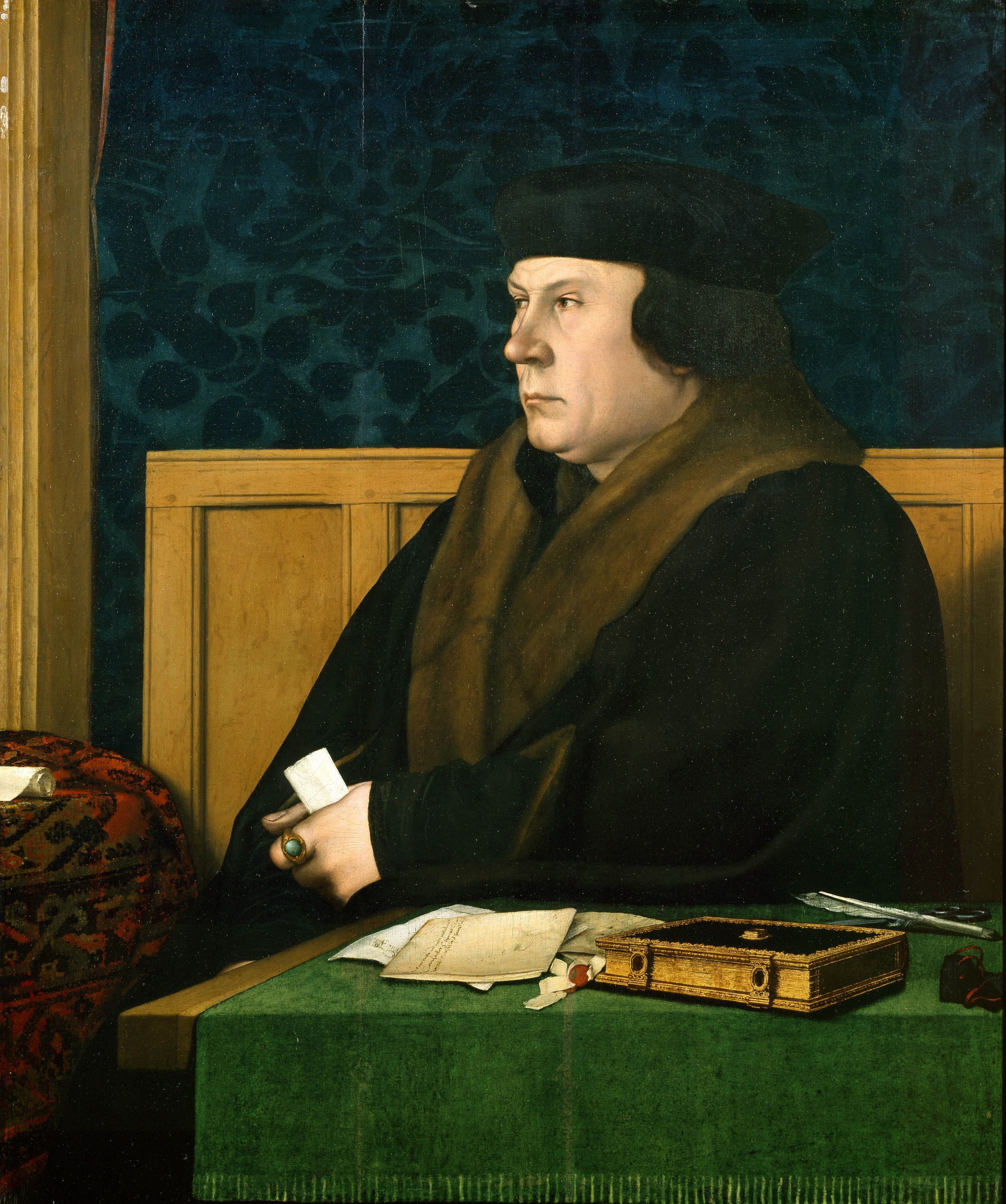
So already we have three different kinds of time functioning in Hilary Mantel’s masterwork — the pace of the story, the grammar of the narrative as experienced firsthand by Cromwell moment by moment, and the reader’s knowledge of the historical events which, for them, are already settled and immutable.
Few if any writers can conduct such an orchestra of time as Mantel, and many and various are the different approaches which other authors have taken to the problem — from, as we will see, one extreme to another. And somewhere between these extremes come writers such as Woolf and Joyce, in, say, Mrs Dalloway or Ulysses, in which the narrative of consciousness weaves and wavers like a heat haze while an almost concrete passing of time in the story is marked by the striking of Big Ben or the tapping of a blind man’s cane.
Take, for example, that tapping of the blind man’s cane. In the ‘Lestrygonians’ episode of Ulysses, Joyce uses the sound — “Tap. Tap. Tap. Tap.” — to mark the passage of time in a way that no authorial statement could. The blind man moves through Dublin at his own pace, indifferent to Bloom’s consciousness swirling around him; each tap is a discrete moment of story time, while the narrative of consciousness dilates and contracts around it like a lung breathing. It is an almost physical demonstration of the gap between the time the character experiences and the time the story requires — and of the reader’s time, hovering above both, aware of patterns and recurrences that Bloom himself cannot see.
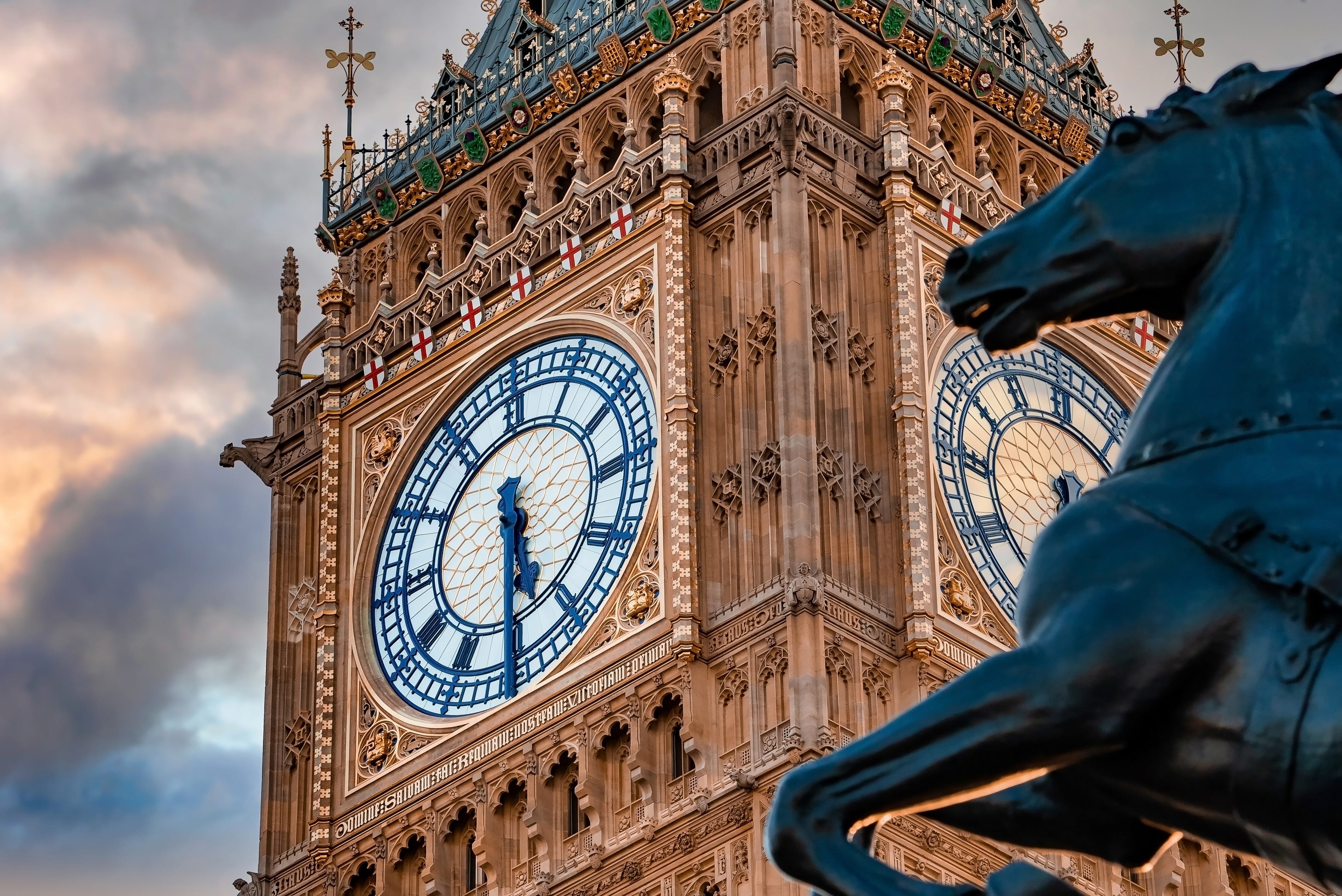
Woolf does something similar with Big Ben in Mrs Dalloway. “The leaden circles dissolved in the air.” The same stroke of the clock is heard by multiple consciousnesses across London, each registering it differently, each inhabiting a different interior time while sharing the same external moment. Clock time and consciousness time run in parallel but never quite meet.
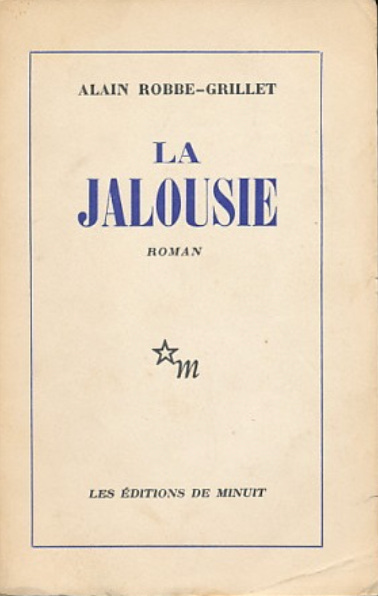
At the far extreme, Alain Robbe-Grillet’s La Jalousie dissolves narrative time almost entirely. The novel begins with the word maintenant — “now” — and never really leaves it. The same scenes recur with slight variations, like a mind that cannot release what it suspects has happened. There is no forward movement, no “the following day,” no summary or ellipsis. The narrator is trapped in a perpetual, flickering present — which is, in its way, the most radical possible answer to the Goldilocks problem: abandon the spectrum altogether and stay in the single burning moment, however unbearably.
Thomas Mann takes the opposite approach in The Magic Mountain. Hans Castorp’s visit to a sanatorium, intended to last three weeks, becomes seven years. Days pass in a sentence; a philosophical conversation fills a chapter. Time dilates until it is almost suspended, and then contracts again without warning. But crucially, Mann makes the dilation itself the subject — the novel is, among other things, about what happens to a person’s sense of time when they are removed from the ordinary rhythms of life. The technique and the theme are inseparable.
What all of these writers have in common — and what Mantel’s Wolf Hall trilogy demonstrates with perhaps the greatest complexity of all — is that they are managing not one time but many, simultaneously, and the skill lies in making that management invisible. At an absolute minimum, there are three distinct times in play in any piece of fiction: the time the characters experience, moving through their story moment by moment; the time the reader brings, including everything they know, remember and anticipate (and how many pages there are left in the story); and the pace that the story itself requires, which is neither of these but the writer’s own judgement about what the telling needs at each point.
In historical fiction, a fourth time enters the room — the fixed chronology of the past, which exists independently of character and reader alike, and against which both are measured. And then, in any fiction, there is the implied past, the backstory pressing into the present without, perhaps, ever being fully rendered — the history that characters carry in their bodies and their habits without it being articulated fully. And then there is interior time: thought, memory, meditation, the way consciousness moves freely across decades while the body stays in the present moment, which is what Joyce and Woolf evoked better than almost anyone.
The writer’s task — and it seems, when laid out like this, just a tad daunting — is to hold all of these in the air simultaneously while the reader feels only one thing: the story. The multiplicity of times must be woven into a single seamless experience. Which is, in the end, not unlike what consciousness itself does for us every waking moment — managing memory, anticipation, sensation and thought as if they were one thing, not many. Rovelli again, describing not a novel but a life: “I am this long, ongoing novel. My life consists of it.”
The four characters are in their chairs. The arrangement matters. And perhaps, on reflection, half a paragraph was not too much to ask.